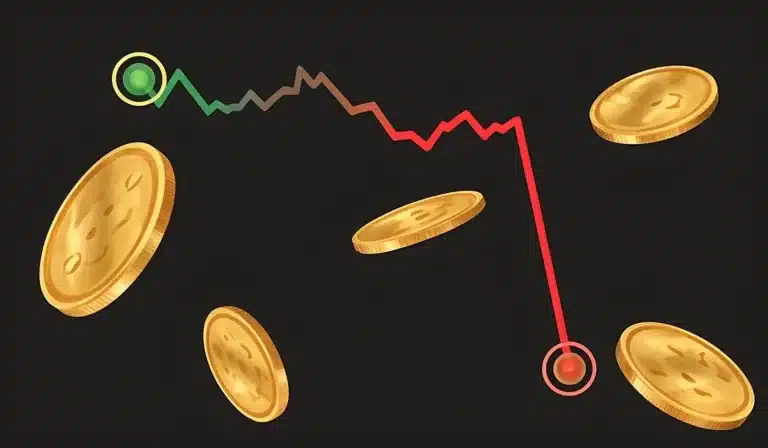
As market volatility continues to disrupt the cryptocurrency landscape, speculation is increasingly influencing investor behavior. Understanding the role of hype and speculative interest can help us navigate these turbulent waters effectively, making it crucial for us to engage and act wisely in today’s financial climate.
Speculative Trends Shaping Cryptocurrency Markets
The cryptocurrency market is experiencing unprecedented shifts fueled significantly by speculation and hype. Recent phenomena such as sudden price surges of specific tokens have emerged as clear indicators of this trend. For example, the HYPE Token saw a staggering price jump of 380% in 2025, largely driven by institutional partnerships and increased retail adoption. According to recent reports, these factors highlight how speculative interests can affect market pricing, often leading to irrational investor behaviors.
Investors are increasingly swayed by trends rather than fundamentals, creating a feedback loop where speculation begets further speculation. This environment not only attracts seasoned traders but also a myriad of new participants drawn in by the allure of quick profits. As a result, the cryptocurrency market has begun to reflect behaviors typically observed in traditional stock markets dominated by speculative trading.
Emerging trends show that many investors are not solely focusing on utility but are instead drawn to the hype surrounding new projects. They chase potential profits, often disregarding factual due diligence. This shift not only contributes to short-term price volatility but also raises questions about the sustainability of certain market segments in the long run.
Hype and Its Influence on Market Volatility
Speculative trading often leads to intense market volatility, making it imperative for investors to acknowledge its driving forces. Factors such as market sentiment and social media play pivotal roles in creating a narrative that can rapidly inflate or deflate an asset’s value. Take, for instance, the HYPE Token, which not only experienced a 380% surge but also a dramatic 6.7% price rise purely from speculative trading in November, despite a lack of substantial backing. This phenomenon beautifully illustrates how trading influenced by fear of missing out (FOMO) can distort reality in the crypto markets.
Social media’s role in fueling hype cannot be overstated. Platforms like Twitter, Reddit, and TikTok have become breeding grounds for viral discussions that can impact market trends almost instantaneously. An informal survey found that many retail investors are often swayed by trending hashtags and viral posts, leading them to make impulsive trading decisions. According to industry experts, such hype can mislead investors into believing they have found the next big opportunity, often without solid grounding in data.
Current Landscape of Cryptocurrency Investment
The current landscape of cryptocurrency investment reveals a spectrum of assets that attract speculative interest. While many cryptocurrencies exist, only a select few, particularly those tied to emerging technologies or narratives, are thriving. For instance, initiatives in Decentralized Finance (DeFi) and Stablecoins have garnered significant attention, but investor preferences can change rapidly based on market sentiment and hype.
Sectors such as Non-Fungible Tokens (NFTs) also showcase how hype-driven investments can overshadow intrinsic value. As various projects emerge, the implications of these investment behaviors on long-term market trends become clear. Investors should focus not only on current trends but also on what drives them as a means to make informed decisions moving forward.

Understanding the Hype Cycle in Crypto Evolution
The Hype Cycle framework is invaluable in analyzing trends within the cryptocurrency space. Initially introduced by Gartner, it defines phases that technologies pass through: Technology Trigger, Peak of Inflated Expectations, Trough of Disillusionment, Slope of Enlightenment, and Plateau of Productivity. To illustrate, Bitcoin’s journey has notably gone through these phases since its inception in 2009, marking the start of the Technology Trigger. As cryptocurrencies gained traction, they rapidly approached the Peak of Inflated Expectations, fueled predominantly by media coverage and speculative investments.
Currently, we may be ascending the Slope of Enlightenment, as the market matures and adoption trends shift toward practical applications of technologies. It is essential to recognize that while hype can lead to substantial price movements, it is the subsequent phases that ultimately determine an asset’s long-term value. According to a historical analysis, understanding where a cryptocurrency stands in the Hype Cycle could provide crucial insights for investors aiming to navigate this volatile market.
Implications of Institutional Involvement in Speculative Trading
As institutional players enter the cryptocurrency arena, they significantly influence market dynamics. Institutional partnerships can validate certain assets, enhancing their perceived utility and stability. However, this involvement also changes the nature of speculative trading. Case studies indicate that such partnerships often lead to increased retail adoption, as seen with the influence of firms like Rorschach I LLC and their collaboration with crypto projects involving retail initiatives.
While institutional investment might stabilize certain cryptocurrencies, it also amplifies speculative interests. As institutional players adopt a more balanced approach between utility and speculation, retail investors often follow suit, mirroring moves made by these larger entities. This shift creates a complex interplay that needs careful navigation on the part of individual investors.
Actionable Strategies for Navigating Speculative Investments
Navigating the turbulent waters of speculative investments requires a well-thought-out strategy. Here are some actionable tips:
– Mitigate risks by diversifying your portfolio across different cryptocurrency sectors.
– Identify genuine opportunities by researching fundamentals rather than merely following trends.
– Build a balanced investment portfolio that accounts for both speculative assets and those with demonstrated utility and market stability.
– Stay informed about market developments and sentiments as they can significantly impact your investments.
In conclusion, speculation will continue to shape the cryptocurrency landscape profoundly. By understanding the driving forces behind hype and market volatility, investors can enhance their decision-making processes and navigate this evolving space more effectively.
About The Author